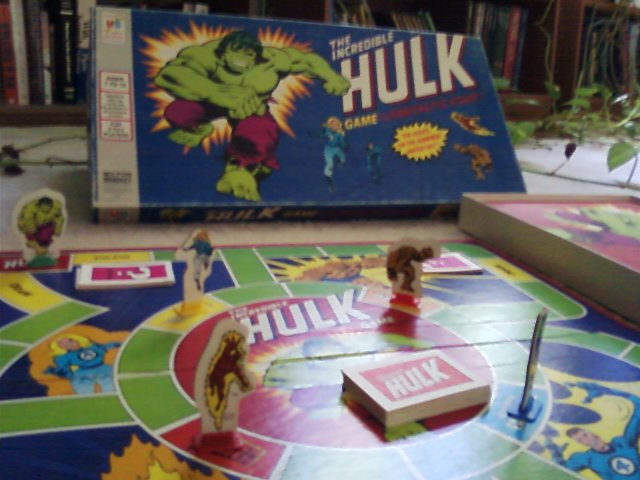
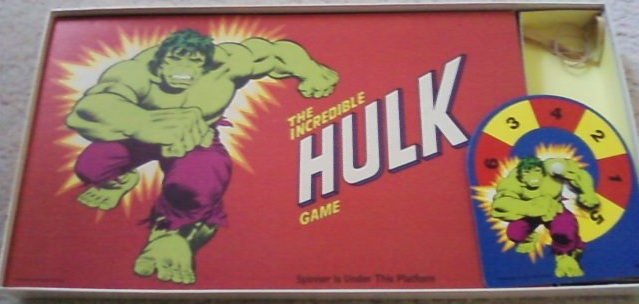
The late 70s was a high point for the popularity of the Incredible Hulk, driven by the successful TV show. At that time, a lot of Hulk merchandise was made, including this 1978 board game that also featured the Fantastic Four. This is a simple, easy-to-play game designed for young children, but it can be made tactically interesting with a couple of rule variants.
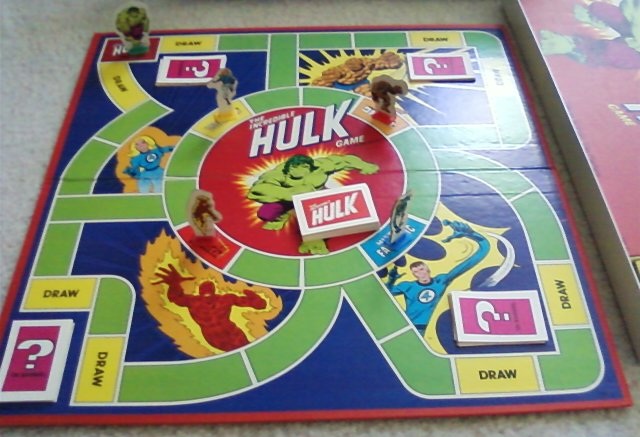
The game consists of the board, a spinner, Hulk cards, Bruce Banner cards, and tokens for the Hulk and the Fantastic Four. Each player is a member of the Fantastic Four, with the goal being to collect all four Banner cards to complete the face, stopping the rampaging Hulk.
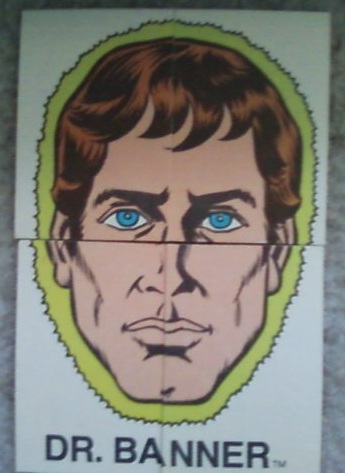
On each spin, you first move the Hulk the designated number of spaces and then your piece. No one can move past the Hulk. You collect Banner cards by landing on a “DRAW” space, but must give up a card if another player or the Hulk lands on you (unless you have a “Safety” card). If the spinner lands on the Hulk, you draw a Hulk card and do what it says.
Playing the game straight is fairly fast, and can be entertaining with three or four players. This game gets low reviews by most board game afficionados, however, because it’s perceived as involving no strategy and being based mostly on luck.
There are in fact two aspects of this game that can make for interesting gameplay. First is the unique feature that you must move both the Hulk and your own piece. Strategic movement can minimize your chances of being landed on and having to give up a card. Second is the fact that you get to choose which pile to discard on top if the Hulk lands on you.
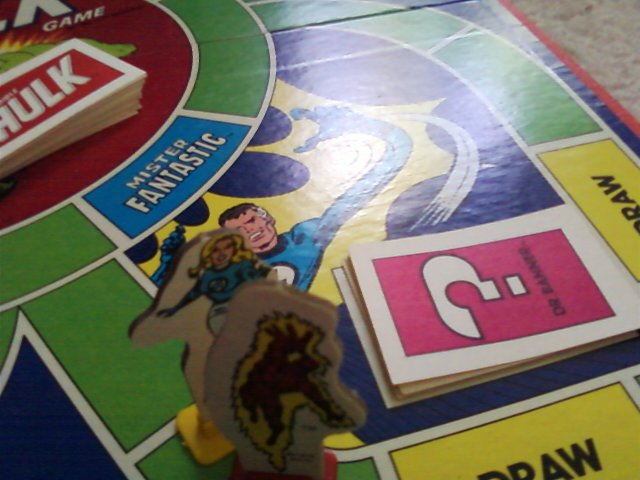
The second aspect can be exploited if you stipulate that all players must display their Banner cards face up. This is counterintuitive, since it would seem that actually takes away some strategy. For one thing, everyone will know who has a safety card. In fact, this does not dumb down the game but makes it more interesting, especially if you also allow a player to choose which card he gives to a player who landed on him. This can lead to a much more prolonged, competitive game, where you discard cards you know to be useless to other players on piles they are targeting.
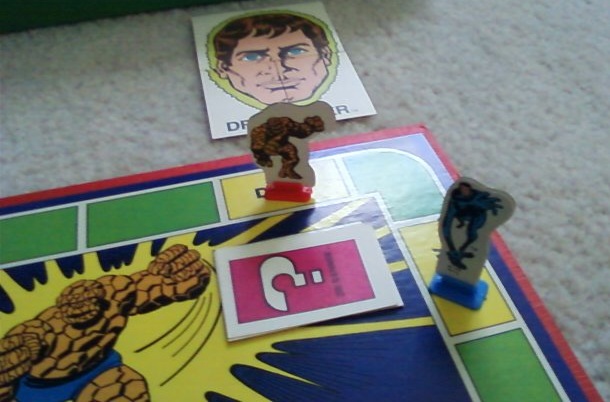
The element of randomness can be further diminished by replacing the spinner with a die, so the Hulk cards are never used. I find, however, that with the above rule variants, the actions on Hulk cards are more tactically interesting.
Giving players more choices in movement can help make this part of the game more tactical, but too many choices will make it too easy to land on a player. I advise treating the spaces linked by the orange double arrow as adjacent, but not those linked by the red X.
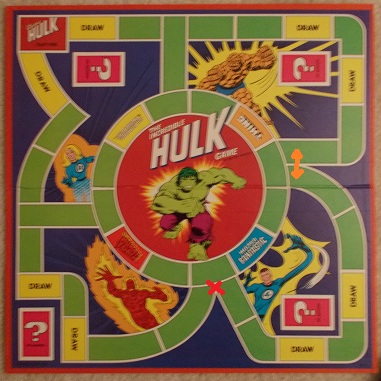
A weakness of the game is it becomes significantly less interesting with only two players. For games with only two (or even three) players, it may be useful to make the lower right section of the board (the spaces marked with X) off limits, distributing the Banner cards only among three draw piles. This raises the probability of landing on a player high enough so that movement tactics become important.
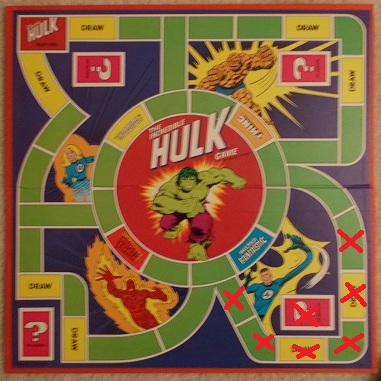
While even these variants aren’t going to make the game into some kind of cerebral strategy contest, The Incredible Hulk board game can be fun and enjoyable for adults, while still accessible to young children. I find that this game, even without variants, is significantly more sophisticated in its mechanics than simple roll-and-move games, and the designers put a lot of thought into making the game balanced and interesting, with diverse actions, though perhaps the design is too dependent on four-player play.
I encourage people to acquire this game, which has a great look and classic character designs of the Bronze Age Hulk and Fantastic Four. You can playtest it with others, or if you use face-up cards, can try it solitaire using all four players. Let me know in the comments if you come up with any other useful variants.
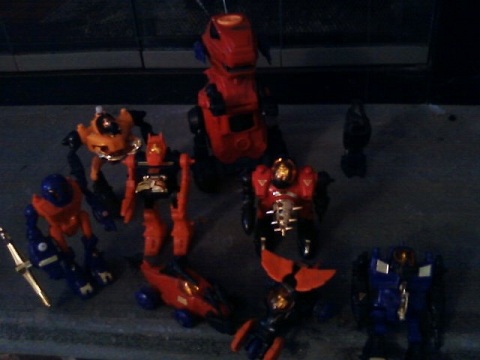
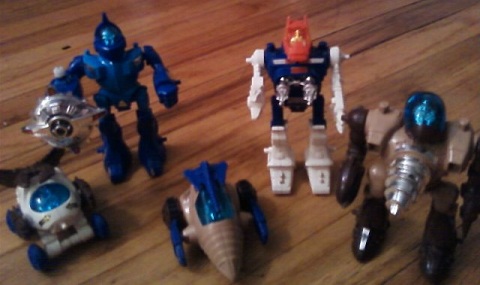
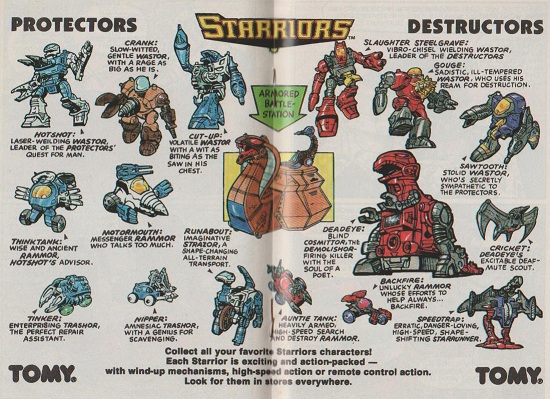
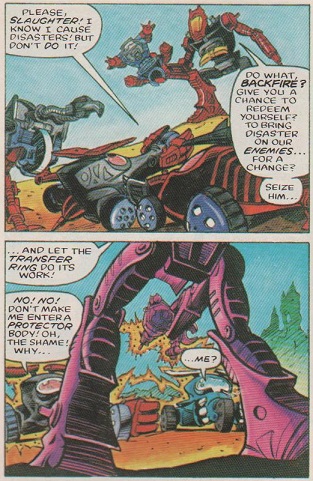 Lastly are the Transfer Rings, which can be worn on a kid’s finger or (more awkwardly) on a Wastor’s arm. According to the mini-comics, these are supposed to allow mind transfer from one Starrior to another of the same body type.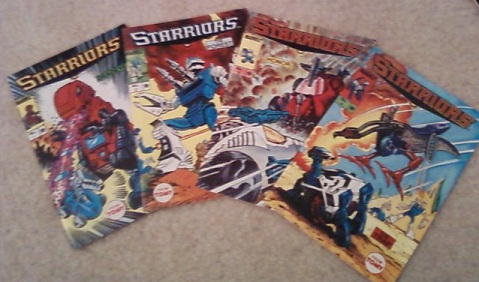
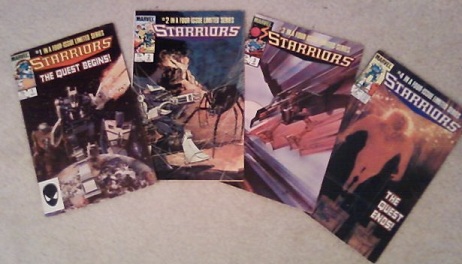
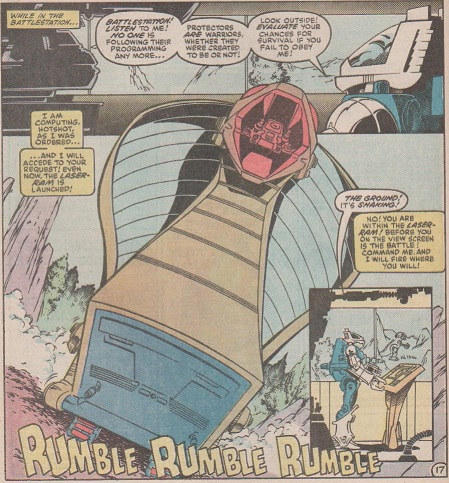 Still, the Marvel miniseries did a good job of showing how the Armored Battlestation would work to defend itself, even portraying the little scorpion robot as a character. The neatest feature of the Battlestation playset was the ability to launch the giant cobra ram, which shot forward on wheels with the press of a lever. My Battlestation is in storage, so it’s not pictured, but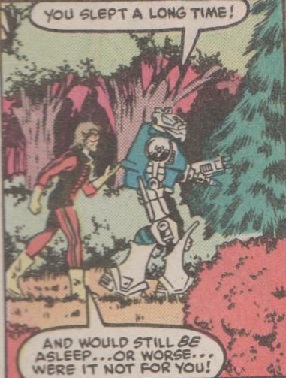
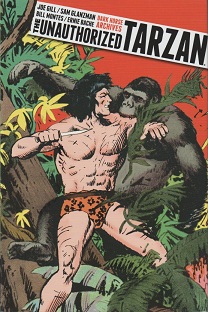 Being a completist, I was able to fill some gaps in my Bronze Age Marvel collections, especially Doctor Strange (featured in the
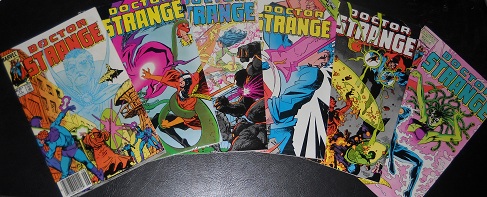
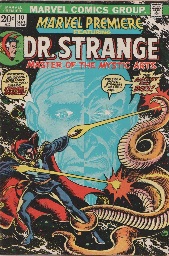 A former surgeon who lost the skill of his hands in a car accident, Stephen Strange discovered spiritual enlightenment and extraordinary magical power, enabling him to ward off Lovecraftian monsters and roam across bizarre dimensions, either mentally with the all-seeing Eye of Agamotto, or floating physically with his Cloak of Levitation. The quaint diction of his rhyming spells and the crazy surrealist visuals of Steve Ditko and his successors were a striking departure in mood from the sci-fi in most comics since the sixties. This was a return to pulp horror, where anything could happen. In Marvel Premiere No. 8-10 (1973), Dr. Strange took over the mantle of Sorcerer Supreme from his mentor the Ancient One. He was thenceforth responsible for defending Earth’s dimension, not from physical threats, but from unseen horrors of the mind and spirit.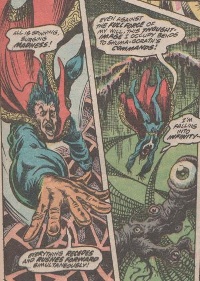
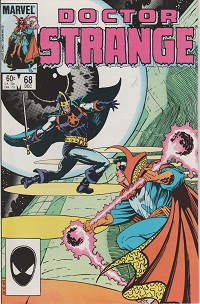
 When Dr. Strange decides to sneak into the Dark Dimension and assist the rebels, we are treated to a great story that reveals the origin of Dormammu’s rise to power and shows fantastic mindscapes of the Dark Dimension. To leave or enter their hideout, the rebels have to traverse the mystic prison of the ever-warring Mindless Ones. Clea uses her knowledge of Earth pop culture for secret passwords, from “Yo Adrian” to “The Pepsi Generation.” This being the 80s, it’s no spoiler to say that the good guys win, but in the process we learn something unsettling about Clea.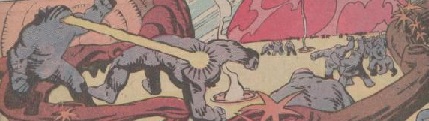
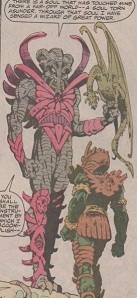 This theme of the hero having to lose something in order to prevail will be repeated, to greater extremes, in later Doctor Strange stories. In the final story arc of his title (No. 75-81), Doctor Strange must destroy all of his mystic talismans and scrolls in order to save his friends and the world from Urthona, a would-be usurping Sorcerer Supreme from a distant galaxy. Worse, he is forced to kill a human host and to use black magic.
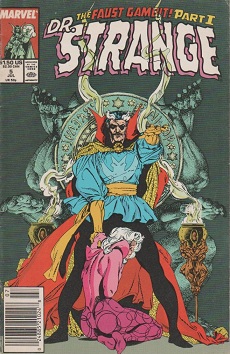 Some semblance of normalcy is restored in the subsequent monthly series, titled: “Dr. Strange: Sorcerer Supreme” (1988-96) A more athletic Stephen Strange returns to his white-magic ways with the help of his friends and restored talismans. Serious havoc is wrought, however, by his old rival Baron Mordo in “The Faust Gambit” (No. 5-8, 1989) and “The Dark Wars” (No. 21-24, 1990). The latter miniseries has a feature on “Legends and Lore of the Dark Dimension.”
 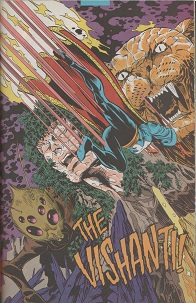 Later, we get a glimpse of the oft-invoked, seldom seen Vishanti (“Demon’s Debt,” No. 48, 1992) The Vishanti were first identified in the 80s (Doctor Strange, Vol. 2, No. 49) as omnipresent Oshtur, all-seeing Agamotto, and Hoggoth, he of the “hoary hosts.”
 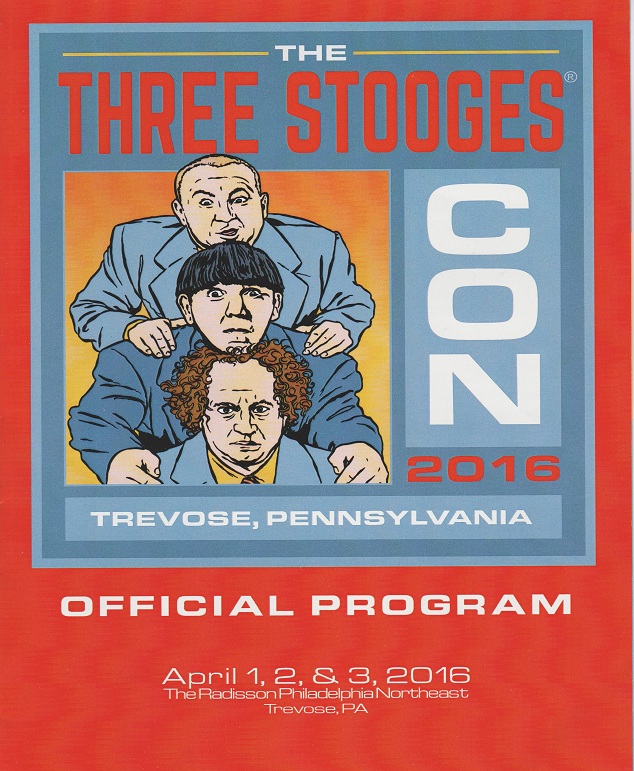 The first major Three Stooges convention in about 17 years took place this past month, with celebrity guests (including Adam West!) and Stooge family members, rooms full of memorabilia for display and sale, and non-stop screening of Stooge films, including some rarities. Attendees from across the country agreed it was well worth the trip to Trevose, PA. If you couldn’t make it this time, here are the highlights of my visit, from Stooges trivia to collectibles tips. Would I meet Adam West? Find out below!
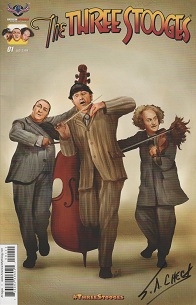
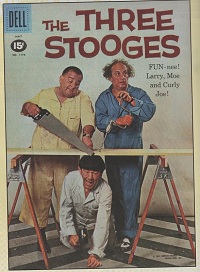 Some pre-press copies of the first issue of a new Three Stooges comic were available. One of the writers, S.A. Check, was on hand to sign copies. They explained this will be an ongoing, bimonthly series (not a limited edition or one-off), so the second issue will be in June. There are five different covers for the first issue, and there will be multiple covers for future issues as well. The first issue has two new stories and a reprint of “Midway Madness” from Dell Four Color #1170 (1961). The parody ads are also a nice touch.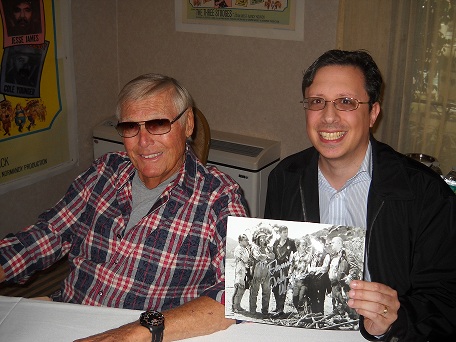
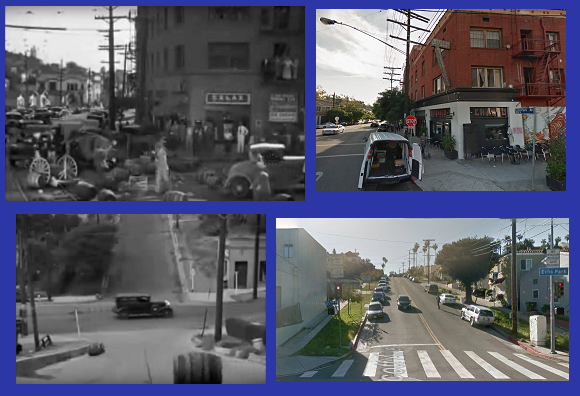
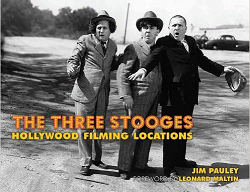 Jim Pauley gave a great talk about his investigation into the Hollywood filming locations of the Columbia shorts. The research was impressive, and can’t be replicated by Google Map searches. For example, a checkerboard sidewalk where Curly stood is now a school, fenced in and tarred over, but they got pics while there was still access. They also found the steep staircase where the boys slid down blocks of ice past a cul-de-sac in a quiet residential neighborhood. You can find details in the